

Table of Contents
- Why Freshness Decides How Your Coffee Tastes
- The Aroma Test: Your First Clue That Coffee Beans Are Fresh
- How to Do the Coffee Bloom Test at Home
- Visual Signs: Fresh vs Stale Coffee Beans
- Coffee Roast Date vs Expiration Date: Which One Matters
- How to Store Coffee Beans So They Stay Fresh Longer
- Taste Indicators: What Stale Coffee Actually Tastes Like
- Conclusion
- Frequently Asked Questions
Last Updated: October 2, 2026
Why Freshness Decides How Your Coffee Tastes
Freshness is the single biggest factor separating a remarkable cup from a forgettable one. If you want to know how to tell if coffee beans are fresh, start with the calendar: whole beans peak roughly 5 to 14 days after roasting, then fade steadily.
That window is short, which is why so many home brewers feel let down.
Fresh coffee is chemistry you can taste. Roasted beans release carbon dioxide for days after roasting, a process called degassing, and that gas shapes how your brew extracts. Understanding it lets you judge freshness with confidence, not guesswork.
Below, we break down seven signs, from the aroma test to the bloom test to the visual clues, so you can spot stale beans before they ruin your morning.
The Aroma Test: Your First Clue That Coffee Beans Are Fresh
Fresh coffee beans smell like the roast itself: sweet, nutty, fruity, or floral, depending on origin. Stale beans smell flat, papery, or faintly like cardboard.
Your nose is faster than any label. Open the bag and breathe in close. If the aroma hits you right away, the coffee is likely fresh; if you have to hunt for the smell, that is a warning sign.
Here is what to check:
- Strong, layered aroma: fresh and full of volatile compounds
- Faint or dusty smell: beans are losing their flavor notes
- Papery or musty scent: oxidation has set in
- No smell at all: the beans are well past their prime
A common mistake is judging by the smell of the whole kitchen rather than the bag itself. Get your nose right into the bag and compare it to the memory of a truly fresh roast.
How to Do the Coffee Bloom Test at Home
The coffee bloom test is the fastest home method to check freshness: pour hot water over fresh grounds and watch. Fresh coffee puffs up and bubbles; stale coffee barely reacts.
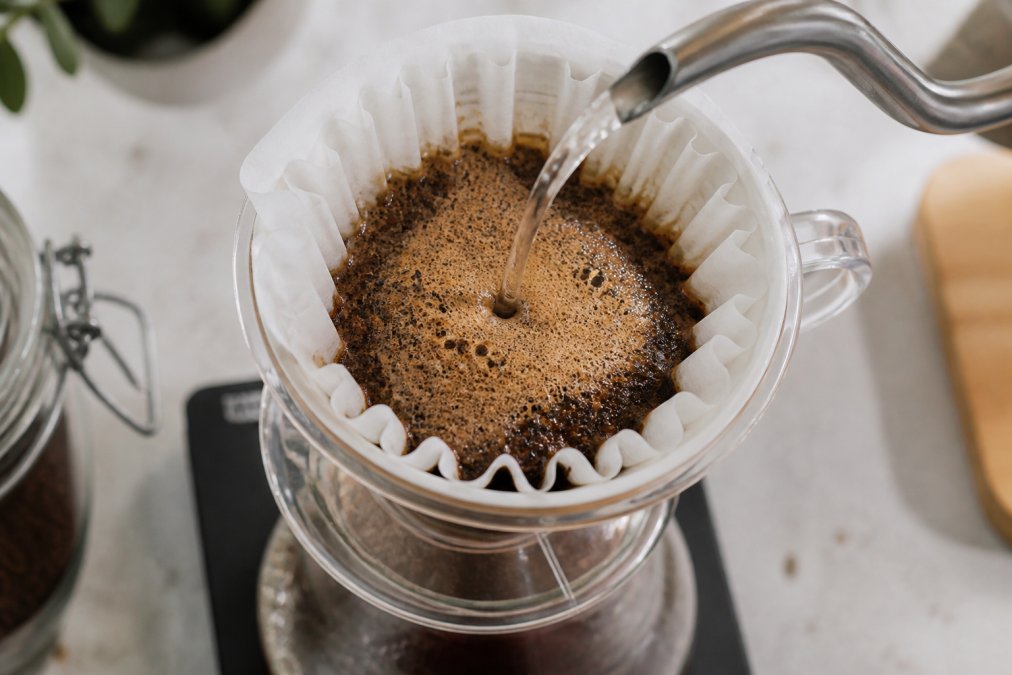
Here is how to run it in under two minutes:
- Grind about 15 grams of beans to a medium grind.
- Place the grounds in a pour-over dripper or a cup.
- Pour a small amount of hot water, just off the boil, over the grounds.
- Watch for 30 seconds. Fresh coffee swells and releases visible bubbles.
Visual Signs: Fresh vs Stale Coffee Beans
Your eyes can catch what your nose misses. Fresh beans look matte and even in color; stale beans turn dull, dry, or oddly shiny. The most common mistake is confusing normal oil development with rancidity, so here is how to tell them apart.
The Oil Confusion: Fresh Dark Roast vs Rancid Beans
Oil on a coffee bean is not automatically bad. Roasting heat breaks down cell walls and releases oils, and dark roasts are roasted longer and hotter, so they often develop a visible sheen within days. That shine is normal for a fresh dark roast.
Here is how to tell them apart:
- Fresh dark roast: even, glossy sheen across most beans; smells rich and roasted
- Rancid beans: dull or sticky surface, sometimes with a whitish film; smells flat, papery, or like old oil
- Light or medium roast with oil: usually a sign of age, because these roasts should not release much oil until they have been sitting for a while
Other Visual Defects That Signal Staleness
Beyond oil, look for these specific defects:
- Faded color: Fresh beans have a consistent, deep color. Stale beans look washed out or uneven, with some beans lighter than others.
- Cracked or chipped surfaces: As beans age and lose moisture, their structure weakens. Small cracks or chips become more common.
- Dry, dusty appearance: Very old beans can look powdery or dusty, especially at the bottom of the bag where fines have settled.
- Mold or white spots: This is rare but serious. If you see fuzzy white, green, or black spots, discard the beans immediately. Mold can produce harmful compounds (the WHO).
What Visual Signs Cannot Tell You
Visual inspection is a useful first filter, but it has limits. A bean can look fine and still be stale, especially from a nitrogen-flushed bag that protected its appearance but not its volatile aromatics. Conversely, a fresh dark roast may look oily and trigger a false alarm.
Coffee Roast Date vs Expiration Date: Which One Matters
The roast date is what matters. An expiration date tells you almost nothing about freshness: it is often set months out and says nothing about when the beans were actually roasted.
Here is the difference in plain terms:
| Label | What It Tells You | How Useful It Is |
|---|---|---|
| Roast date | When the beans were roasted | High: your true freshness clock |
| Best-by date | A rough quality window | Low: often months after roasting |
| Expiration date | A safety cutoff | Low: unrelated to peak flavor |
Packaging Technology Changes the Clock
The roast date is your starting point, but packaging determines how fast the clock runs. Two bags roasted the same day can age at very different rates depending on what surrounds the beans.
Light Roasts and Dark Roasts Age Differently
- Light roasts are denser and retain more of their original compounds. They tend to degas more slowly and often reach peak flavor later, sometimes around 7 to 14 days after roasting. They can also stay drinkable longer, though their bright acidity fades first.
- Medium roasts are the most forgiving. They typically peak somewhere between 5 and 12 days and offer a broad window where the flavor is balanced and stable.
- Dark roasts degas faster because the roasting process has already broken down more of the bean structure. They may peak as early as 3 to 7 days and then decline more quickly. The oils that give dark roasts their bold flavor also oxidize faster, so a dark roast can taste stale sooner than a light roast roasted on the same day.
The resting period sits inside that window. Right after roasting, beans degas heavily, and many brewers find flavor settles and improves after a few days of rest. Peak flavor usually lands in that first two-week stretch, but the exact day depends on the roast and the bag.
How to Store Coffee Beans So They Stay Fresh Longer
Store coffee beans in an airtight container, away from light, heat, and moisture, at room temperature. This slows oxidation, the main enemy of fresh flavor.
The four threats to freshness are simple:
- Oxygen: causes oxidation and rancidity
- Light: breaks down volatile compounds
- Moisture: speeds up staling and can cause mold
- Heat: pushes oils and aromatics to fade faster
Taste Indicators: What Stale Coffee Actually Tastes Like
Stale coffee tastes flat, hollow, and papery, with a dull lingering bitterness. Fresh coffee tastes bright and layered, with clear flavor notes and lively acidity.
Run through this quick sensory check:
- Fresh: vibrant acidity, clear sweetness, balanced bitterness
- Fading: muted flavor, less aroma, shorter finish
- Stale: papery taste, hollow body, harsh or muddy bitterness
Conclusion
The hard part is not learning the signs. It is finding beans fresh enough to pass every test, every time. Aroma, bloom, color, and taste all tell the truth, but only if the coffee was roasted recently to begin with.
Frequently Asked Questions
How long do coffee beans stay fresh after the roast date?
Whole coffee beans hit peak flavor roughly 4 to 14 days after roasting, once degassing slows down. After that window, they gradually lose volatile compounds and aroma. Most roasters print a roast date on the bag rather than a generic best-by date. If you buy beans with no roast date, you have no way to know how long they sat in a warehouse. For the boldest cup, use beans within 2 to 4 weeks of roasting and store them in an airtight container away from light and moisture.
What does the coffee bloom test tell me about freshness?
The coffee bloom test shows how much carbon dioxide is still trapped in the grounds. Pour a small amount of hot water over fresh grounds and watch. Fresh beans bubble and foam vigorously, forming a thick dome. Stale beans barely react because the carbon dioxide escaped long ago. A weak or flat bloom is one of the clearest signs your coffee beans are no longer fresh. Try this test before every new bag to set your expectations for the brew.
Does the roast date on the bag really matter more than the expiration date?
Yes. The expiration date tells you when a bag is technically safe to use, not when it tastes best. Coffee roast date vs expiration date is a real distinction: roast date tracks flavor decline, while expiration tracks food safety. A bag stamped 12 months out could have been roasted 8 months ago and taste papery and flat. Always look for a printed roast date. If a bag only shows a best-by date, treat that as a warning sign about how long it has been sitting.
How should I store coffee beans to keep them fresh?
Store coffee beans in an airtight container with an oxygen barrier, kept in a cool, dark cupboard away from the stove. Heat, light, moisture, and oxygen speed up oxidation and rancidity. Skip the fridge for daily use because condensation cycles damage the beans. For longer storage, freeze a portion in a sealed bag and let it come to room temperature before grinding. Buy in smaller quantities you will finish within a few weeks rather than bulk bags that sit open for months.