

Table of Contents
- What Is High Altitude Coffee?
- Coffee Growing Altitude: A Global Guide to Elevation Ranges
- How Altitude Affects Coffee Flavor: Cooler Nights, Slower Ripening
- Coffee Bean Density: Why Hard Beans Matter
- High Altitude vs Low Altitude Coffee: Key Differences
- Altitude Is One Factor Among Many
- How to Read a Coffee Label for Elevation
- Frequently Asked Questions
Last Updated: October 5, 2026
What Is High Altitude Coffee?
High altitude coffee is coffee grown at elevations high enough to slow the cherry's development, typically above 1,200 metres (about 4,000 feet) above sea level. That slower ripening concentrates sugars and builds denser beans, which is why high-grown lots tend to taste brighter, more aromatic, and more layered than coffee grown near sea level. This guide from EmperRoar Coffee breaks down the elevation ranges, the flavour science, and how to read a bag before you buy.
Altitude is the most quoted number on a specialty coffee label. It is also the most misunderstood.
Why Elevation Ranges Vary by Region
There is no single global definition of "high altitude." A farm at 1,400 metres in Brazil sits in high-grown territory; the same number in Ethiopia is unremarkable, because much of the country's coffee already grows well above it. Colombia's growers often work between 1,200 and 2,000 metres, while parts of Kenya and Ethiopia push past 2,000. Latitude shifts the baseline: the closer a country sits to the equator, the higher the farm must be to reach the same cooler temperatures. A useful rule is to judge elevation against the region's own range, not a universal cut-off. If a label says "high grown" without a number, it tells you very little.

Coffee Growing Altitude: A Global Guide to Elevation Ranges
Most producing countries cluster into recognisable bands, and knowing them helps you predict what a bag will taste like.
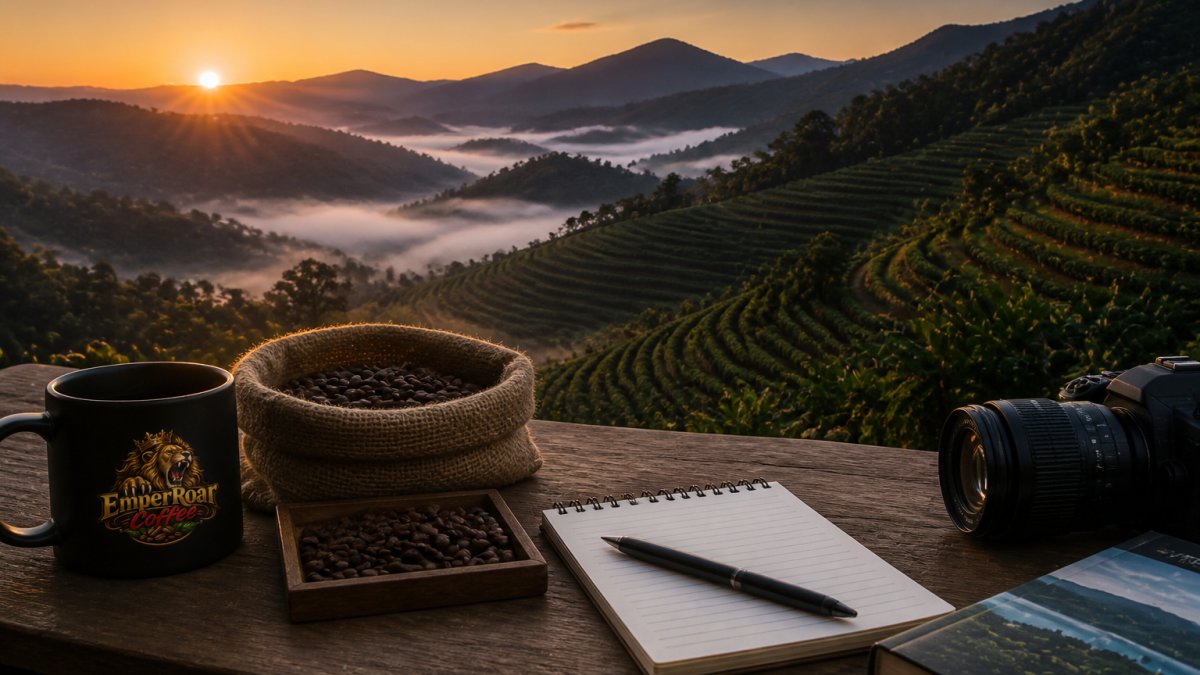
Broadly, coffee-growing regions fall into three tiers:
- Low altitude (below 900 metres / 2,950 feet): warmer, faster ripening, softer acidity, common in Brazil's lower estates and parts of Indonesia.
- Mid altitude (900-1,200 metres / 2,950-3,940 feet): balanced cup, moderate density, found across Central America and Colombia's lower farms.
- High altitude (1,200 metres / 3,940 feet and above): denser beans, brighter acidity, more floral and fruity notes, typical of Kenya, Ethiopia, and Colombia's upper farms.
Those tiers are a starting point, not a universal rule. Latitude shifts the baseline: the closer a country sits to the equator, the higher a farm must be to reach the same cooler temperatures. That is why a 1,400-metre farm in Brazil can be considered high-grown, while the same elevation in Ethiopia is unremarkable, much of Ethiopia's coffee already grows well above it. Colombia's specialty farms often sit between 1,200 and 2,000 metres, Kenya's best lots frequently push past 1,700 metres, and parts of Ethiopia's Yirgacheffe and Sidama regions exceed 2,000 metres. In contrast, Brazil's large estates in Minas Gerais and São Paulo often operate between 800 and 1,200 metres, and Hawaii's Kona coffee typically grows between 200 and 800 metres, a reminder that island origins can produce excellent coffee at elevations that would be mid-range elsewhere.
The Specialty Coffee Association's green coffee classification guidance treats elevation as one grading input among several, which is a useful reminder that the number is a clue, not a verdict.
Metric and Imperial Equivalents You Will See on Labels
Labels mix units constantly, so here is the conversion you need:
- 1,000 metres = roughly 3,280 feet
- 1,200 metres = roughly 3,940 feet
- 1,500 metres = roughly 4,920 feet
- 1,800 metres = roughly 5,900 feet
- 2,000 metres = roughly 6,560 feet
If a bag says "1,700 masl," that is metres above sea level, the standard abbreviation used across origin countries. Some roasters print feet instead, which makes a mid-range farm look dramatic. A coffee at 1,200 metres is about 3,940 feet, a figure that sounds impressive until you realise it sits at the low end of the high-altitude band. Always check the unit before you judge the number.
How Altitude Affects Coffee Flavor: Cooler Nights, Slower Ripening
Temperature is the mechanism behind flavour. Higher elevations run cooler, especially at night, and those cold nights slow the coffee tree's metabolism. The cherry takes longer to ripen, extending the growing season and giving the bean more time to develop sugars and aromatic compounds. Thin air and lower oxygen add mild environmental stress, which the plant answers by producing a denser, more concentrated seed.
The result lands in the cup as acidity and complexity. Bright, citrus-like acidity, floral aromatics, and layered fruit notes are the classic signatures of slow-ripened coffee. Lower-altitude lots ripen fast, which often produces a flatter, sweeter, less vivid cup. That said, slow ripening is a tendency, not a guarantee. Rainfall, shade, soil, variety, and processing all shape the final flavour, and a well-farmed low-altitude lot can beat a poorly handled high-grown one.
Coffee Bean Density: Why Hard Beans Matter
Bean density is the mass of a coffee bean relative to its size, and it rises with elevation. Slow-grown beans pack more matter into the same volume, which is why the trade calls them "hard beans." Density matters for two practical reasons. First, denser beans roast more evenly and hold up to heat, giving a roaster more control. Second, they extract differently in the brew: a dense bean needs a slightly finer grind or a touch more time to give up its flavour.
You can feel the difference. Pick up a high-grown bean and a low-grown one of similar size, and the high-grown one feels heavier. That weight is a rough proxy for the concentration of sugars and acids inside.
High Altitude vs Low Altitude Coffee: Key Differences
The comparison is not about good versus bad, it is about two different cups.
| Factor | High Altitude Coffee | Low Altitude Coffee |
|---|---|---|
| Elevation | 1,200 m+ (3,940 ft+) | Below 900 m (2,950 ft) |
| Ripening | Slow, long season | Fast, short season |
| Bean density | High (hard beans) | Lower, softer beans |
| Acidity | Bright, vivid | Muted, soft |
| Flavour | Fruity, floral, spicy | Nutty, chocolatey, mild |
| Body | Lighter, more complex | Heavier, simpler |
Neither column wins outright. If you want a bold, comforting morning cup, a lower-grown coffee can be exactly right. If you want a cup that changes as it cools, high-grown is the one to chase.
Altitude Is One Factor Among Many
Elevation gets more credit than it deserves. A farm can sit at 1,900 metres and still produce a dull cup if the cherries are picked underripe, the processing is rushed, or the roast is off. Variety matters enormously: a Gesha and a Bourbon grown side by side will taste nothing alike. Soil, rainfall, shade management, and harvest timing all leave fingerprints on the final flavour.
The honest framing is that altitude sets a ceiling on potential, not a floor on quality. It creates the conditions for complexity, and then farming and roasting decide whether that potential shows up in your cup. Treat a high elevation figure as a promising signal, not a promise.
What does the evidence actually support? The mechanism linking cooler nights to slower ripening and denser beans is well established in coffee-growing practice. The leap from density to specific flavour notes, "fruity," "floral," "spicy", is less direct. Those descriptors come from a combination of variety, terroir, processing method, and roast profile. A washed Kenyan at 1,800 metres and a natural Ethiopian at 1,900 metres may both be high-grown, but they will taste radically different because of processing and variety, not elevation alone. Most practitioners find that altitude is a useful predictor of acidity and density, but a poor predictor of specific flavour notes without knowing the other variables.
This is where marketing often overreaches. A bag that promises "bright, fruity, floral" solely because of elevation is oversimplifying. The same farm can produce wildly different cups across harvests, processing methods, and roast levels. Altitude is one input in a complex system, important, but not deterministic.
How to Read a Coffee Label for Elevation
Start with the number, then verify the context. A label that lists a specific elevation in metres or feet, names the region, and states the variety gives you real information. A label that says only "high grown" or "mountain coffee" gives you marketing. Look for "masl" after the figure, check the country against the regional bands above, and match the flavour notes to the elevation tier. If a bag promises "fruity and floral" at 800 metres, be sceptical.
The same logic applies to freshness. A precise elevation figure next to a roast date tells you the roaster is serious about transparency. That is the kind of detail worth paying attention to when you shop.
For coffee enthusiasts who want to taste the difference altitude makes, our Tanzania and Kenya lots are grown in the high-elevation East African bands described above, and our Ethiopia Natural leans into the fruity, floral character that slow ripening tends to produce. Each is available whole bean or ground to your setup.


Frequently Asked Questions
What is considered high-altitude coffee?
Most coffee professionals treat 1,200 meters (roughly 4,000 feet) and above as high altitude, though the threshold shifts by origin. In Colombia, 1,600 to 2,000 meters is common for specialty lots. In Ethiopia, farms often sit between 1,800 and 2,200 meters. The label matters less than the context: a Kenyan coffee at 1,700 meters and a Guatemalan at 1,700 meters will not taste identical because soil, rainfall, and processing also shape the cup.
How does altitude affect coffee flavor?
Cooler temperatures and thinner air at elevation slow cherry ripening, extending the growing season. That longer maturation lets sugars develop more fully inside the bean, which often translates to brighter acidity, more layered fruit and floral notes, and a cleaner finish. The effect is real but not automatic. A poorly processed high-grown coffee can taste flat, and a well-processed lower-grown lot can taste excellent. Altitude tilts the odds; it does not guarantee the outcome.
Is high-altitude coffee better than low-altitude coffee?
Not universally. High-grown beans tend to be denser and more complex, which is why specialty roasters seek them out. But low-altitude coffees from regions like Brazil or Hawaii can be smooth, nutty, and deeply satisfying, especially as espresso or with milk. If you want vivid acidity and fruit-forward notes, high altitude coffee is a strong starting point. If you prefer chocolate and caramel comfort, a lower-grown bean may suit you better.
Does high-altitude coffee have more caffeine?
No consistent evidence shows that elevation increases caffeine content. Caffeine levels vary more by species (Arabica vs Robusta) and roast profile than by growing altitude. Robusta, which typically grows at lower elevations, actually contains roughly twice the caffeine of Arabica. If caffeine is your priority, focus on the species and roast, not the elevation printed on the bag.
Altitude tells you what a coffee might become, not what it is. The only way to know whether a high-grown lot delivers the brightness and complexity the label promises is to brew it yourself. At EmperRoar Coffee, we curate whole bean and ground coffees from high-elevation origins, offer multiple grind options to match your setup, and roast for the bold, flavour-forward cup our customers look for. Browse our collection and find your next favourite. Shop Now.