

Table of Contents
- Why Bean Choice Makes or Breaks Cold Brew
- How We Evaluated the Best Coffee Beans for Cold Brew
- 1. Ethiopia Natural: Best Fruity and Vibrant Cold Brew
- 2. Kenya: Best Bright and Aromatic Cold Brew
- 3. Tanzania: Best Smooth and Balanced Cold Brew
- 4. African Espresso: Best Bold and Rich Cold Brew
- 5. Kopi Safari: Best Single-Origin Adventure
- 6. Holiday Blend: Best Warm and Inviting Cold Brew
- 7. Coffee with Mushrooms: Best Functional Daily Cup
- How to Make Cold Brew Coffee at Home: A Simple Method
- Frequently Asked Questions
Last Updated: October 7, 2026
Why Bean Choice Makes or Breaks Cold Brew
Cold brew is unforgiving: hot brewing hides mediocre beans behind heat and speed, but cold extraction exposes whatever flavor the bean actually has. That is why choosing from the 7 best coffee beans for cold brew matters more than any equipment upgrade.
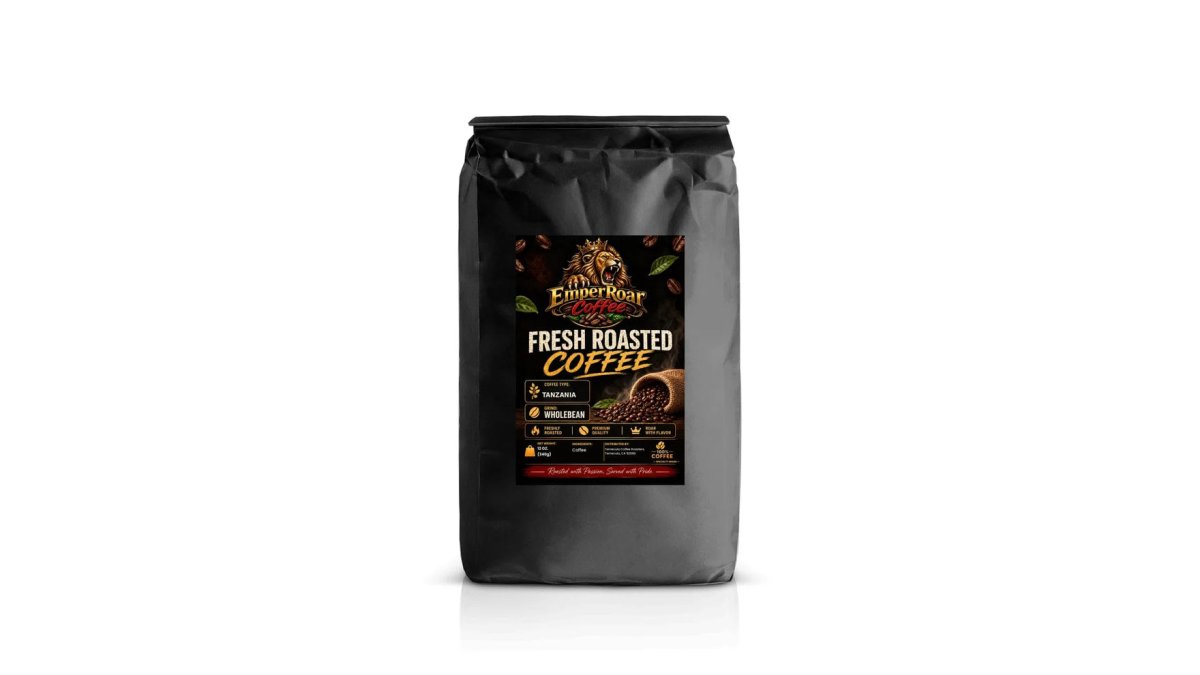
At EmperRoar Coffee, we provide a premium selection of whole bean and ground coffee, meticulously curated for true coffee aficionados. The beans below are our editorial picks, ranked by immersion-brew performance.

Most guides rank by brand recognition, but a bright roast that shines in a pour-over can taste thin after 18 hours of cold extraction.
How We Evaluated the Best Coffee Beans for Cold Brew
We judged every bean on four criteria: flavor clarity after long steeping, grind consistency at a coarse setting, value per ounce, and forgiveness if your brewing ratio drifts.
The Science of Cold Extraction: Why Origin and Roast Matter
Heat accelerates extraction of almost everything, but cold water is selective: it pulls out fewer bitter alkaloids and more volatile aromatics, so the bean's inherent character matters more, not less.
Origin shapes the flavor baseline.
Roast level changes extraction speed. Light roasts retain more acids and sugars but taste thin or sour if under-extracted; dark roasts are porous and extract faster, turning bitter if over-steeped.
Processing method is the third variable. Natural-process beans carry fermented, fruity, wine-like notes that cold brew amplifies; washed beans are cleaner and more predictable, with honey-process in between.
Value Per Ounce: A Comparison Table
Most guides list price per bag, which tells you nothing about cost per cup. Below is the value breakdown for the beans in this list, calculated as cost per ounce and estimated cost per 16-ounce serving of concentrate at a 1:8 ratio.
| Bean | Smallest Size | Largest Size | Price (smallest) | Price (largest) | Cost per oz (smallest) | Cost per oz (largest) | Approx. cost per 16 oz concentrate |
|---|---|---|---|---|---|---|---|
| Ethiopia Natural | 12 oz | 12 lb | $24.99 | $24.99 (per lb equivalent) | $2.08 | $1.56 | $3.12 |
| Kenya | 12 oz | 12 lb | $24.99 | $24.99 (per lb equivalent) | $2.08 | $1.56 | $3.12 |
| Tanzania | 12 oz | 12 lb | $24.99 | $24.99 (per lb equivalent) | $2.08 | $1.56 | $3.12 |
| African Espresso | 12 oz | 12 lb | $24.99 | $24.99 (per lb equivalent) | $2.08 | $1.56 | $3.12 |
| Kopi Safari | 12 oz | 12 lb | $24.99 | $24.99 (per lb equivalent) | $2.08 | $1.56 | $3.12 |
| Holiday Blend | 12 oz | 12 lb | $24.99 | $24.99 (per lb equivalent) | $2.08 | $1.56 | $3.12 |
| Coffee with Mushrooms | 8 oz | 8 oz | $20.99 | $20.99 | $2.62 | $2.62 | $5.24 |
Note: Prices are as listed at the time of writing and may vary. Cost per ounce for larger sizes assumes the same per-pound price as the smallest size. Always check the product page for current bulk pricing.

The takeaway: the six core coffee beans all land at the same cost per ounce in bulk, so choose by flavor, not price.
Sustainability and Ethical Sourcing: What to Look For
Few cold brew guides mention sourcing, but for many buyers it is a deciding factor, and the difference often comes down to certification and transparency.
None of these certifications guarantee better taste. If you care about origin, look for roasters who publish farm name, region, altitude, and processing method rather than just a country name, that attention to detail shows up in the cup.
USDA organic labeling standards explains what organic certification actually verifies, which is worth checking before you pay a premium for it.
The Bottom Line on Evaluation
The best bean matches your taste: fruit and brightness, go African; chocolate and comfort, go Latin American; function with flavor, the mushroom blend; a clear conscience, look for the certifications above.
1. Ethiopia Natural: Best Fruity and Vibrant Cold Brew
Ethiopia Natural is our top pick for fruit-forward cold brew. Natural processing leaves fruit sugars on the bean during drying, and cold extraction pulls those notes forward without heat flattening them.
Order it in Coarse grind and you skip the grinder entirely. Sizes run from 12oz to 12lb, so you can test a small bag before committing to bulk.
The tradeoff: natural-process beans can taste wild if you over-steep. Cap it at 16 hours.
2. Kenya: Best Bright and Aromatic Cold Brew
Kenya delivers the richest aroma of the group, a single-origin bean with a smooth finish that holds up across a long steep.

Available in Whole Bean, Espresso, Standard, and Coarse grinds, in sizes from 12oz to 1LB, 2LB, 5LB, and 12LB. At $24.99, it lands in the same bracket as the rest of our African lineup.
If you drink cold brew black, this is the one to start with.
3. Tanzania: Best Smooth and Balanced Cold Brew
Tanzania is the safest pick for a household with mixed preferences: its flavor profile is smooth, balanced, and aromatic, without leaning too far in any direction.
It comes in Whole Bean, Espresso, Standard, and Coarse grinds, with sizes from 12oz to 12lb. That range matters for cold brew specifically: a 12lb bag is a real option if you brew concentrate weekly.
Where it falls short: if you want a punchy, distinctive cup, Tanzania is too even-keeled. It is a workhorse, not a showpiece.
4. African Espresso: Best Bold and Rich Cold Brew
African Espresso brings a full-bodied character and a smooth finish that survives dilution better than lighter roasts.
Coarse grind, sizes 12oz through 12lb, $24.99. The name says espresso, but the coarse option makes it a natural fit for immersion brewing.
5. Kopi Safari: Best Single-Origin Adventure
Kopi Safari is built for drinkers who want to explore: rich and aromatic, sold as premium whole beans for fresh grinding at home.
Sizes span 12oz, 1LB, 2LB, 5LB, and 12LB, with Whole Bean, Espresso, Standard, and Coarse grind options. At $24.99, it sits with the rest of the range.
What most reviews miss: Kopi Safari rewards a freshly roasted bean more than the others. Grind it the day you brew and the difference is obvious.
6. Holiday Blend: Best Warm and Inviting Cold Brew
Holiday Blend is the seasonal outlier: warm, rich, and inviting, with a smooth finish that works as a cold brew in a way most spiced-adjacent blends do not.
Coarse grind, 12oz to 12lb, $24.99. Brew it at 1:8 for 18 hours and serve over ice with a splash of milk.
One honest limitation: this is a blend, not a single-origin, so the flavor shifts batch to batch more than the African picks above.
7. Coffee with Mushrooms: Best Functional Daily Cup
Coffee with Mushrooms Medium Roast is the practical daily pick: a smooth medium roast blended with mushroom ingredients, and the only pick here under $25 at $20.99 for 8oz.
The Dark Roast version combines dark roasted coffee with Lion's Mane, Cordyceps, and Reishi mushrooms for a bolder result. Both come in Standard grind and suit coffee makers, espresso machines, and French press.
A note on method: for cold brew, use a coarse grind and a 1:8 brewing ratio, then steep 12 to 18 hours. If your batch tastes bitter, your grind is too fine. If it tastes sour or weak, steep longer.
How to Make Cold Brew Coffee at Home: A Simple Method
Cold brew at home takes three steps: grind coarse, combine with cold water at a 1:8 ratio, and steep 12 to 18 hours before filtering. The difference between flat and vibrant concentrate comes down to water chemistry, grind consistency, and troubleshooting off-flavors.
The Core Recipe
- Weigh 100g of coarse-ground coffee
- Add 800ml cold, filtered water
- Stir once to saturate the grounds
- Cover and steep at room temperature or in the fridge
- Strain through a fine mesh or paper filter
- Store the concentrate in a sealed jar for up to two weeks
How long to steep cold brew coffee depends on the bean. Fruity naturals peak around 14 to 16 hours. Bold roasts can handle 18 to 20. Taste at 12 hours and every two after that.
Why Water Chemistry Matters More Than You Think
Most guides say use filtered water and move on, but magnesium and calcium directly affect extraction: magnesium binds fruity acids into solution, calcium enhances body and mouthfeel. Too soft and extraction stalls, giving a hollow, papery cup; too hard and minerals mute acidity, leaving a chalky finish.
The sweet spot is total hardness between 50 and 100 ppm as calcium carbonate, with pH around 7.
If you want to get precise, Specialty Coffee Association water quality standards publishes target ranges for total hardness, alkalinity, and pH that apply to all brewing methods, including cold extraction.
Troubleshooting Bitter or Sour Cold Brew
Even with good beans and water, cold brew can go wrong. Here is how to fix the two most common problems.
Bitter cold brew almost always comes from over-extraction:
- Grind too fine. Table-salt texture exposes too much surface area and releases harsh compounds. Fix: grind coarser, or use a "coarse" or "French press" setting.
- Steep time too long. Beyond 20 hours, even coarse grounds pull bitter alkaloids. Fix: shorten by 2-4 hours and taste earlier.
- Water too hot. Steeping above 75°F speeds extraction. Fix: move to the fridge or reduce steep time.
- Bean choice. Dark roasts and Robusta-heavy blends turn bitter sooner. Cut steep time by 2 hours versus a medium roast.
Sour or weak cold brew points to under-extraction:
- Grind too coarse. Peppercorn-sized grounds resist water. Fix: grind slightly finer, coarse sand texture.
- Steep time too short. Under 12 hours, sugars and caramel notes have not released. Fix: extend to 14-16 hours.
- Water too soft. Low-mineral water under-extracts. Fix: switch to balanced-mineral water or add a pinch of Epsom salt.
- Bean choice. Very light roasts and high-acidity African beans taste sour if under-extracted. Fix: steep 16-18 hours or blend with a medium roast.
A useful diagnostic: bitter and sour at once means uneven extraction from an inconsistent grind. A burr grinder produces more uniform particles than a blade grinder, and for cold brew, uniformity matters more than for almost any other method.
Frequently Asked Questions
What is the best coffee for making cold brew?
The best coffee for cold brew is freshly roasted whole-bean coffee with a coarse grind. Medium to dark roasts work well because they extract smoothly and produce chocolatey, caramel notes. Single-origin beans like Ethiopia Natural or Kenya offer vibrant, fruity flavors. Avoid pre-ground coffee, as it can turn bitter during the long steeping process. EmperRoar Coffee offers several whole-bean options ideal for cold brew.
Should you use light or dark roast beans for cold brew?
Both work, but they produce different results. Light roasts retain more acidity and fruity notes, giving cold brew a brighter, tea-like quality. Dark roasts extract deeper chocolate and caramel flavors with lower acidity. Medium roasts offer a balance of both. For a smooth, low-acid cold brew, start with a medium or dark roast like African Espresso or Holiday Blend.
What is the best grind size for cold brew coffee?
Coarse grind is essential for cold brew. It looks like sea salt or raw sugar and allows water to extract flavor slowly without turning the brew bitter. If you grind too fine, you'll get muddy, over-extracted coffee. Most EmperRoar beans are available in a coarse grind option, or you can grind whole beans at home with a burr grinder.
How long should coffee steep for cold brew?
Steep cold brew for 12 to 18 hours at room temperature or in the fridge. A 12-hour steep yields a lighter, brighter cup, while 18 hours produces a bolder, richer concentrate. If you prefer a stronger brew, extend to 24 hours, but taste as you go to avoid bitterness. Strain through a fine mesh or paper filter when done.
Is whole-bean or pre-ground coffee better for cold brew?
Whole-bean coffee is better because it stays fresh longer and lets you control the grind size. Pre-ground coffee loses aromatic compounds quickly and may be too fine for cold brew, leading to bitterness. Investing in a burr grinder and grinding fresh before brewing gives you the best flavor. EmperRoar offers whole-bean options for this reason.